I ordered a small device off eBay. It arrived in a little box. I plugged it in, connected it to my WiFi, typed in a Bitcoin address, and now it sits on my desk doing one million hashes per second with a completely non-zero chance of winning 3.125 BTC. This is a completely rational purchase and I will not be taking questions.
What It Actually Is
The NerdMiner v2 is an open-source project built around the ESP32 microcontroller — the same cheap little chip that powers everything from smart plugs to weather stations. Someone had the brilliant idea of pointing one at the Bitcoin network and seeing how far they could get. The answer is: surprisingly far, with a dash of absurdity.
It connects to a dedicated solo mining pool (solobtc.nmminer.com), pulls down work, hashes SHA-256 as fast as the ESP32 can manage, and submits shares. If one of those shares happens to be below the network difficulty target — you win the block. 3.125 BTC lands in your wallet. The pool takes nothing.
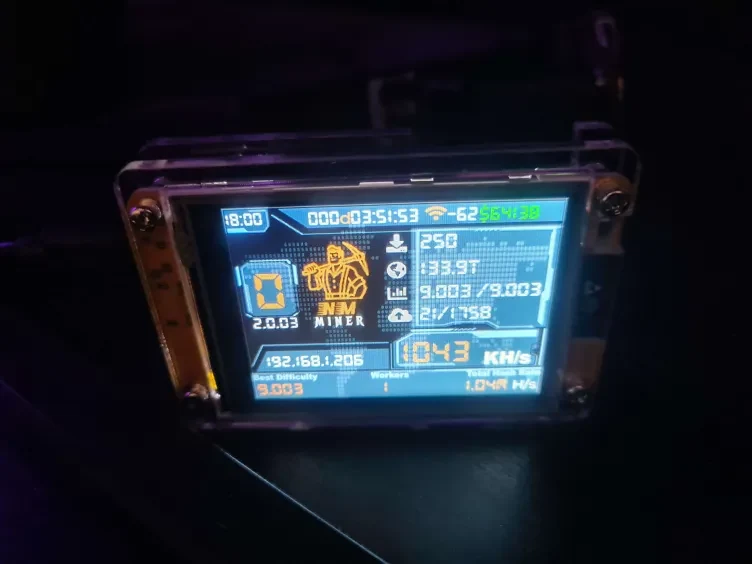
The device has a little full-colour screen that shows your hashrate, best difficulty, block height, and uptime. It draws about as much power as an LED bulb. The seller (a bloke called Charlie at PlayMods) sent me setup instructions the moment it shipped and answered a follow-up question at 10pm the same day. Genuinely good experience.

The numbers that make this whole thing absurd.
The Honest Maths
Right, let's not pretend. The current Bitcoin network hashrate is somewhere around 600 exahash per second. One exahash is one quintillion hashes. My NerdMiner is doing around 1,008 kilohashes — that's just over one million per second.
But here's the thing — the odds are not zero. Someone running a NerdMiner could win tomorrow. It's happened before on similar devices. The math is brutal but the probability exists, and there's something philosophically satisfying about that.
First Two Minutes Live
Setup was genuinely stupid simple. Plug in via USB, connect your phone to the WiFi network the device broadcasts, open the web interface at 192.168.4.1, select your home WiFi, paste in your Bitcoin address, set timezone, hit save. Two minutes later it's on your home network and mining.
After two minutes of uptime, the dashboard already showed 23 shares submitted and accepted — 100% acceptance rate. The device was chatting to the pool cleanly from the jump.
You can monitor it from any browser on the home network by going to its IP address — the device displays it on screen. There's a Swarm view for if you want to run multiple units and watch them all at once. I'm not there yet. But I'm not ruling it out.
Why Bother?
Because it's interesting. Because £20 is the price of a takeaway and this will still be running in three years. Because understanding how Bitcoin mining actually works — the pool communication, the share submission, the difficulty targeting — is genuinely worth knowing. And because running your own node (the next project on the list) pairs naturally with this: point the miner at your own infrastructure and you're participating in the network end-to-end.
Will it pay out? Almost certainly not. Is it a cool desk gadget that does real cryptographic work 24/7 and might, against all conceivable odds, fund a new GPU? Yes. That's enough for me.
The Lucky Nugget is on the network. Let it run.